Find the plant.
Read the ground.
Move the job.
Search 418 supplier records through the work you need done, the conditions underfoot and the place your project begins.
READYAUEST. 2026
FIELD CARDS56LOCAL
MARKETS
A directory built around the question you actually have.
You might know the machine. You might only know the job, the place, or the problem underfoot. Every path leads back to relevant equipment, practical checks and supplier field cards.
I know the
equipment.
Browse fifteen equipment families and learn what to specify.
OPEN EQUIPMENT INDEX →ROUTE / B02I know the
job.
Start with the outcome—from bulk earthworks to shutdown support.
CHOOSE A JOB →ROUTE / C03I know the
constraint.
Find planning signals for wet ground, tight access, slopes and distance.
READ THE GROUND →ROUTE / D04I know the
place.
Use local field pages for terrain, access and mobilisation context.
OPEN THE ATLAS →Fifteen ways to
shape a worksite.
VIEW COMPLETE INDEX ↗Earthmoving Equipment
Selection notes, supplier routes and field questions.
EXPLORE →02Compaction Equipment
Selection notes, supplier routes and field questions.
EXPLORE →03Crane
Selection notes, supplier routes and field questions.
EXPLORE →04Access Equipment
Selection notes, supplier routes and field questions.
EXPLORE →05Material Handling Equipment
Selection notes, supplier routes and field questions.
EXPLORE →06Trucks and Transport
Selection notes, supplier routes and field questions.
EXPLORE →07Power Generation
Selection notes, supplier routes and field questions.
EXPLORE →08Pumps and Fluid Management
Selection notes, supplier routes and field questions.
EXPLORE →09Site Accommodation and Facilities
Selection notes, supplier routes and field questions.
EXPLORE →10Traffic Management Equipment
Selection notes, supplier routes and field questions.
EXPLORE →11Tools and General Equipment
Selection notes, supplier routes and field questions.
EXPLORE →12Mining Equipment
Selection notes, supplier routes and field questions.
EXPLORE →13Road Construction Equipment
Selection notes, supplier routes and field questions.
EXPLORE →14Lifting and Rigging Equipment
Selection notes, supplier routes and field questions.
EXPLORE →15Welding and Industrial Equipment
Selection notes, supplier routes and field questions.
EXPLORE →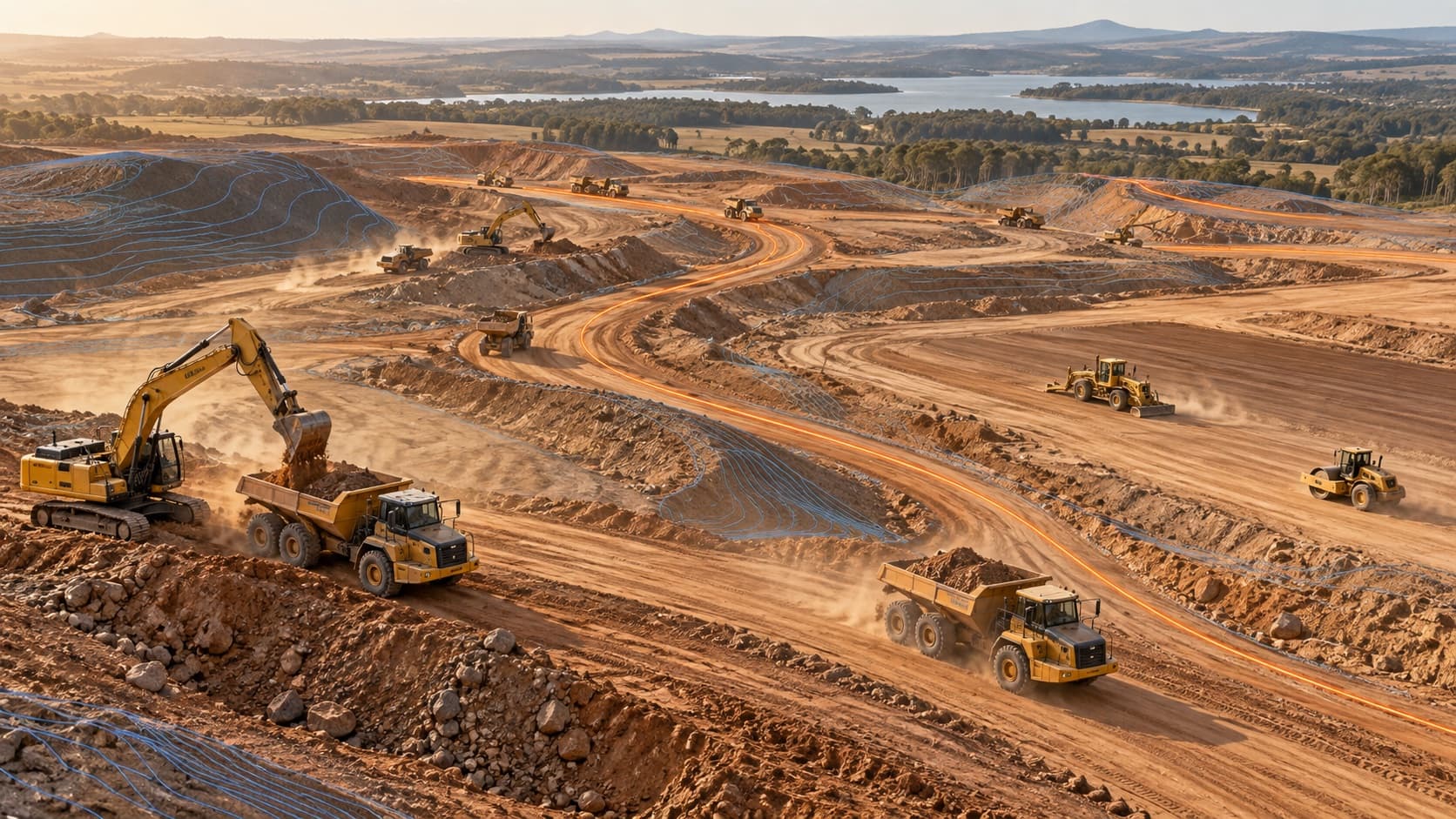
Availability has
a postcode.
A supplier may cover your region while the proposed machine sits hundreds of kilometres away. Ask where the actual unit is, how it will travel and where support will come from.
READ THE REMOTE-SITE GUIDE →What has to happen
on the ground?
Job guides translate a project outcome into plant families, supporting services and the questions that separate a generic quote from a workable plan.
Bulk earthworks
Bulk earthworks are a production system: excavators, dozers, loaders, haul units, graders, water and compaction all need to cycle at compatible rates. Start with material type, cut-to-fill balance and haul distance before choosing machine sizes.
OPEN PLAYBOOK ↗OPEN · PROTECT · REINSTATE02Trenching and utilities
Utility work combines excavation with locating, shoring, lifting, pumping and reinstatement. The right plant choice is often governed by corridor width, live services and public access rather than bucket capacity alone.
OPEN PLAYBOOK ↗CONTROL THE LIFT PATH03Lifting and installation
A lift is the load, radius, ground, rigging, access and schedule considered together. Define the heaviest and furthest lift, then test crane setup, exclusion zones and transport before discussing availability.
OPEN PLAYBOOK ↗BUILD THE CORRIDOR04Road building
Road crews need repeatable passes and predictable support across a moving workfront. Match graders, rollers, water carts and paving support to material layers, width, moisture and test requirements.
OPEN PLAYBOOK ↗MAKE THE GROUND LEGIBLE05Site clearing
Clearing is not simply pushing vegetation aside. Survey controls, retained trees, weeds, topsoil, disposal and fire conditions shape the fleet and sequence needed to open the site responsibly.
OPEN PLAYBOOK ↗SEPARATE BEFORE YOU MOVE06Demolition and remediation
Demolition plant must suit the structure, materials, reach and waste stream. Attachments, dust suppression, screening and transport are part of the selection—not afterthoughts.
OPEN PLAYBOOK ↗FROM FORMATION TO POUR07Concrete and foundations
Foundation work connects excavation, drilling, lifting, pumping, access and spoil handling. Programme the handoffs so plant does not compete for the same narrow work zone.
OPEN PLAYBOOK ↗CONTROL THE WATER08Drainage and dewatering
Water changes production, stability and environmental risk. Define inflow, head, solids and discharge conditions so pumping equipment and backup capacity match the consequence of failure.
OPEN PLAYBOOK ↗EVERY HOUR HAS A JOB09Shutdown maintenance
Shutdowns compress access, lifting, power and labour into a fixed window. Equipment readiness, inductions, standby arrangements and shared work zones should be closed before the plant enters site.
OPEN PLAYBOOK ↗PRACTICAL PLANT FOR REGIONAL WORK10Farm, water and property works
Farm dams, tracks, clearing, drainage and property improvement often depend on travel distance, changing ground and owner-operated logistics. Define the outcome and access before comparing hourly rates.
OPEN PLAYBOOK ↗The same machine behaves differently when the ground changes.
Eight condition guides help you test access, configuration, safety interfaces and supplier readiness before booking.
Soft or wet ground
Low bearing capacity changes undercarriage choice, machine weight, access routes and recovery planning. Treat ground improvement and matting as production inputs.
READ CONDITIONS →◉MEASURE THE WHOLE PATHTight urban access
The smallest machine is not automatically the best machine. Check gates, turning, overhead services, working radius, noise windows and material removal as one access problem.
READ CONDITIONS →◉STABILITY FIRSTSteep and sloping sites
Slope, crossfall and edge conditions affect traction, stability and safe working envelopes. Machine selection must follow a competent site assessment and manufacturer limits.
READ CONDITIONS →◉DISTANCE MAGNIFIES OMISSIONSRemote and long-distance sites
Remote hire is an availability, mobilisation and support problem. Parts, fuel, tyres, operators, accommodation and communications belong in the initial comparison.
READ CONDITIONS →◉SALT CHANGES THE MAINTENANCECoastal and corrosive environments
Salt, wind and sand can affect equipment condition, electrical systems, access and cleaning requirements. Discuss exposure and environmental controls before allocation.
READ CONDITIONS →◉PROTECT THE WORKING ENVELOPELive traffic interfaces
Plant near traffic needs space, separation, visibility and coordinated movements. Traffic control and delivery sequencing can determine the productive machine size.
READ CONDITIONS →◉HEIGHT, AIR AND FLOOR LOADLow-clearance and indoor work
Indoor work adds exhaust, ventilation, floor loading, turning and overhead constraints. Electric or compact equipment may solve one issue while attachments and charging create another.
READ CONDITIONS →◉PLAN FOR HEAT LOADHot and dusty conditions
Heat and dust affect people, cooling systems, filters, visibility and water demand. Production targets should include servicing and fatigue controls.
READ CONDITIONS →56 places.
Eight state systems.
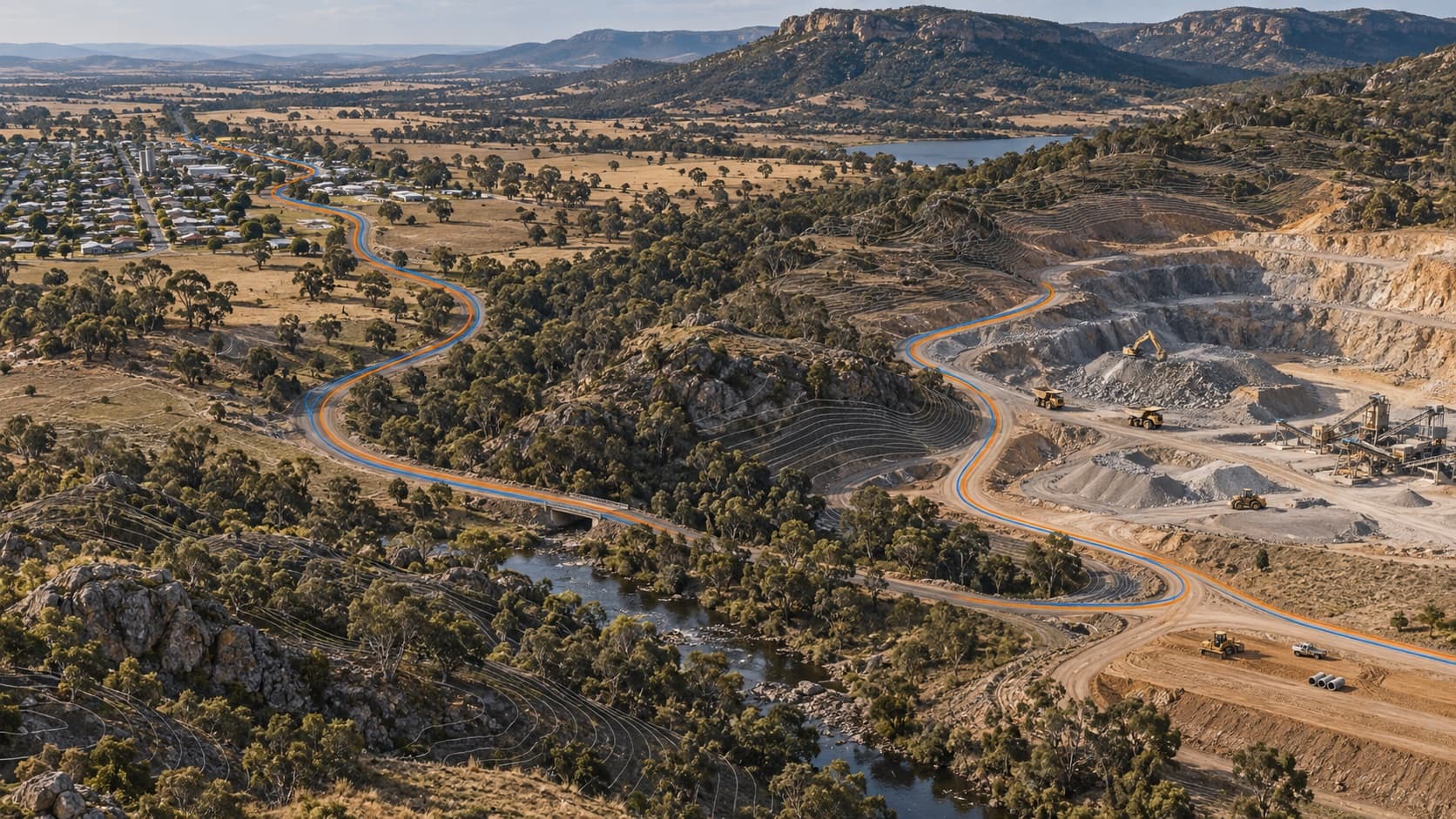
Each place page combines local project context with access, terrain, weather and mobilisation questions—plus supplier records and equipment pathways.
WORK ZONE
Possible suppliers.
Better first questions.
Company records are discovery tools, not availability promises. Open a card, inspect what is published, then send a project-ready enquiry.
1800 Hose Van Norris Hose ...
Tuggerah
OPEN CARD →FIELD CARD 002SA24/7 Local Water Carting
Webb Beach
OPEN CARD →FIELD CARD 003SA532 CRANES PTY LTD
Payneham
OPEN CARD →FIELD CARD 004NSWA P Delaney & Co.
Albury
OPEN CARD →FIELD CARD 005QLDA-Team Earthmoving QLD
Heritage Park
OPEN CARD →FIELD CARD 006QLDA.K. Torrens
Caboolture
OPEN CARD →FIELD CARD 007QLDAA Steel Works
Clagiraba
OPEN CARD →FIELD CARD 008NSWAadarsh Engineering pty Ltd
Ingleburn
OPEN CARD →FIELD CARD 009QLDABC LANDSCAPE AND GARDEN SO...
Booral
OPEN CARD →FIELD CARD 010QLDAccess Equipment Sales
Wacol
OPEN CARD →FIELD CARD 011WAAccess Hire Australia
Kalgoorlie
OPEN CARD →FIELD CARD 012WAAcqua Blast
Naval Base
OPEN CARD →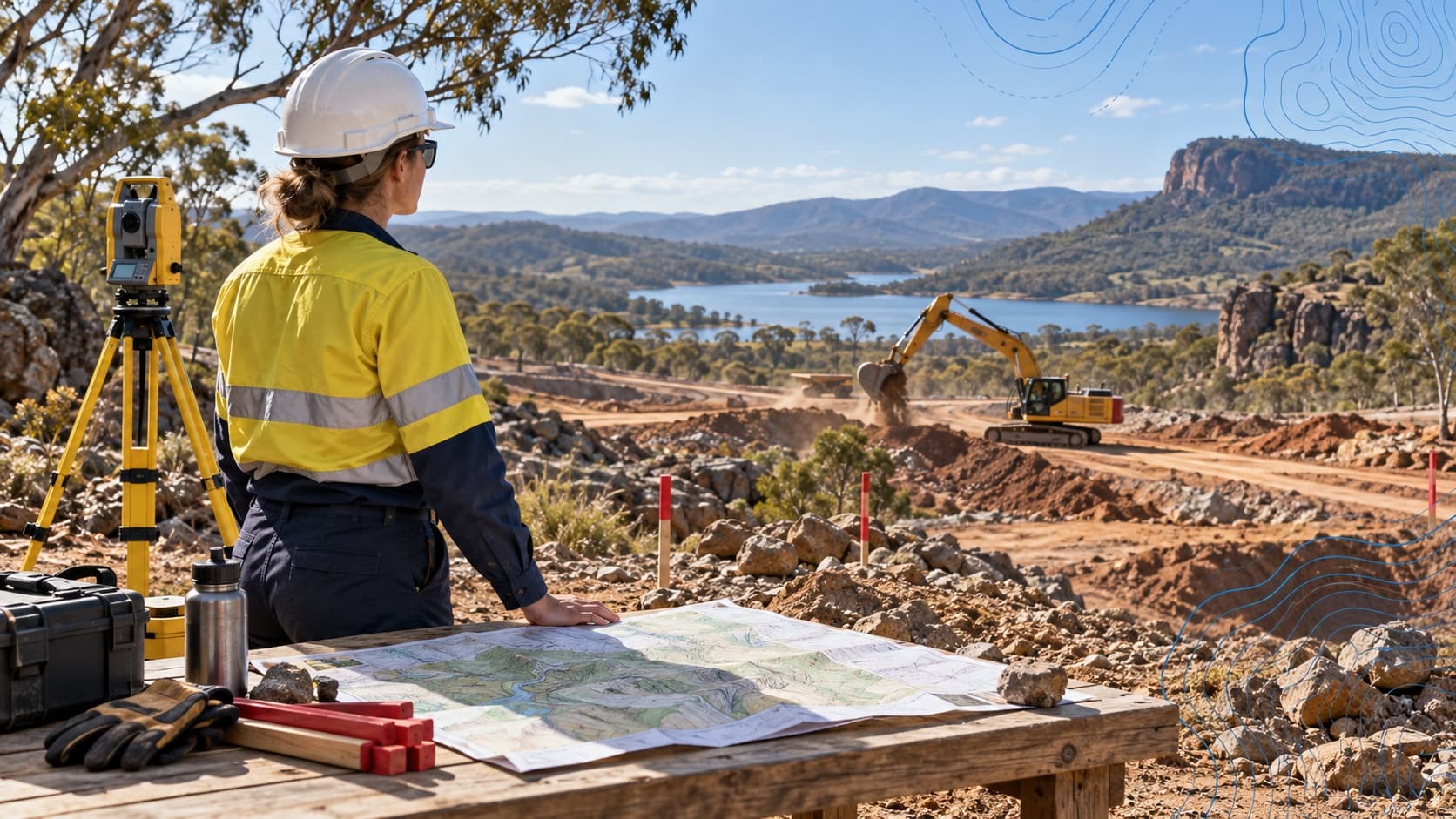 RECON / BEFORE MOBILISATION
Walk the uncertainty.
Bring back evidence.
Eight original reconnaissance briefs turn access, services, material flow, lifting, ground, night work, distance and demobilisation into better supplier conversations.
See the whole job
before hiring one part.
Original planning routes for common Australian project types.
New subdivision plant plan
- Bulk balance
- Underground services
- Road layers
- Multiple fronts
Warehouse build plant plan
- Pad preparation
- Structural lifts
- Slab loading
- Internal access
Road rehabilitation plant plan
- Possession length
- Material removal
- Layer sequence
- Handback testing
Solar farm plant plan
- Internal roads
- Pile installation
- Material distribution
- Wet-weather access
Bridge works plant plan
- Crane pads
- Water access
- Possessions
- Temporary works
Mine expansion plant plan
- Mine specification
- Utilisation
- Maintenance
- Camp and logistics
Flood recovery plant plan
- Access status
- Contamination
- Water movement
- Waste destination
Farm dam plant plan
- Soil investigation
- Embankment method
- Spillway
- Weather window