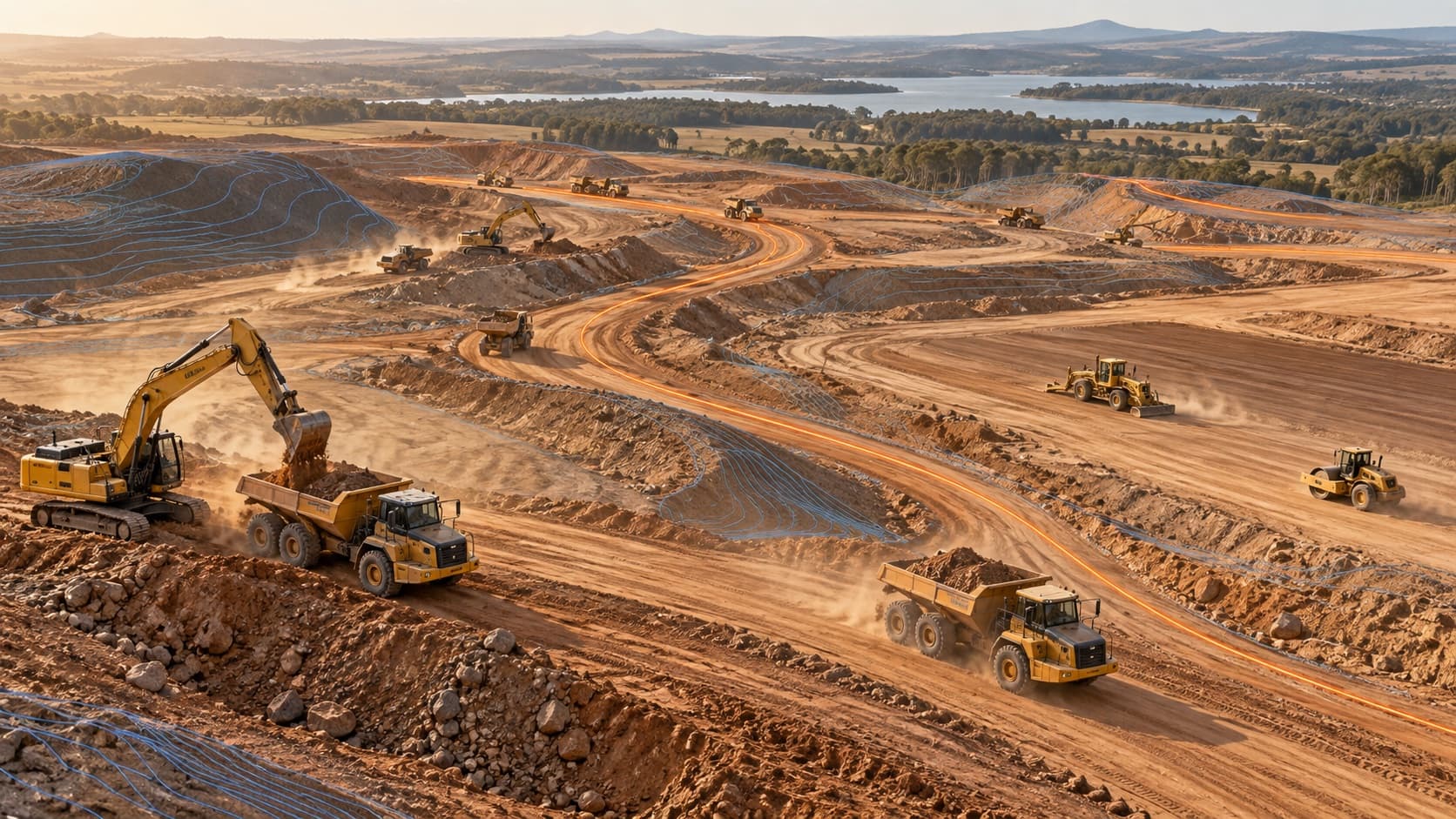
Map the material flow
See every load, turn and wait before sizing the fleet.
The reconnaissance brief.
Productivity comes from a balanced cycle rather than the biggest individual machine. This mission maps where material starts, where it finishes, how it travels and what interrupts the loop so loaders, excavators, haul units, graders and compaction plant can be compared as one system.
Record what you can verify, label what remains uncertain, and send the evidence with the enquiry. The supplier can then assess equipment fit, mobilisation and support against a clearer operating picture.
What to read on the ground.
- 01Material type, estimated volume and expected swell
- 02One-way haul distance, gradients and passing points
- 03Loading, tipping, spreading and compaction cycle times
- 04Weather, dust, water and traffic-control interruptions
Five passes through the mission.
- 01
Draw the cut, stockpile, processing, fill and disposal zones.
- 02
Measure representative haul legs and identify speed or visibility constraints.
- 03
Estimate realistic loading and discharge times for each material stream.
- 04
Find the controlling resource and size the supporting fleet around it.
- 05
Agree how production will be measured and reviewed after the first shift.