MACHINE FIELD GUIDE / DIG · LOAD · TRENCH · LIFT
Excavator hire
Excavators are the most requested machine in Australian plant hire because one unit can dig, trench, load trucks, handle pipe and run attachments. The right hire starts with operating weight, reach and dig depth matched to the task, then tests access, transport and the attachments the work needs.
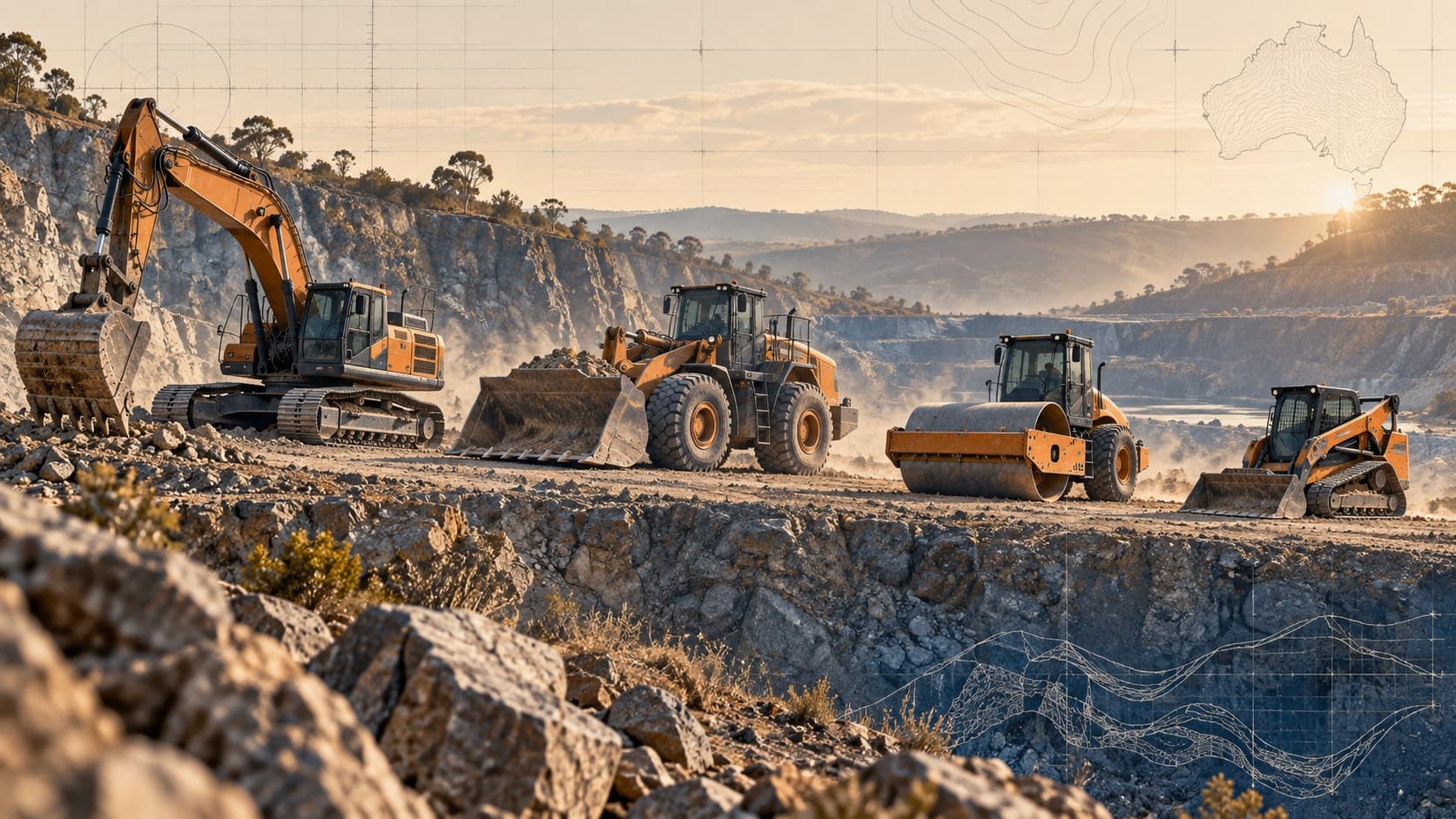
FIELD PLATE / 28 PUBLISHED SUPPLIER RECORDSMatch the size class to the task, then confirm the exact unit.
Excavator size classes.
| Class | Typical work |
|---|---|
| 1–2 t micro | Backyards, landscaping, footings and indoor or through-gate work. |
| 3–6 t mini | Residential trenching, pool dig-outs, driveways and small services. |
| 8–14 t midi | Civil trenching, subdivision services, drainage and tighter road corridors. |
| 20–30 t | Bulk earthworks, truck loading, larger pipe and deeper excavation. |
| 35 t + | Mass excavation, quarry and mining support, heavy rock breaking. |
COMMON USE / 01Bulk excavation and truck loading
COMMON USE / 02Trenching for water, sewer, power and communications
COMMON USE / 03Footings, pads and basement excavation
COMMON USE / 04Rock breaking, ripping and demolition with attachments
QUOTE CHECK
What to specify.
- Material, quantity and deepest dig depth
- Access width, overhead limits and tail-swing constraints
- Buckets, hitch type and attachments such as hammer, auger or tilt
- Machine control or GPS requirements
- Wet or dry hire, shifts and expected duration
Watch points.
Float transport is often a separate line and scales with machine weight.
Minimum hours and travel time can dominate short jobs.
Service proving is required before digging near live utilities.
Rates for excavator hire vary with size, location, duration, operator arrangement and transport. Read the plant hire cost guide and the wet vs dry hire comparison before comparing quotes, and use the supplier checklist to confirm the details.
FIELD FAQ
Excavator hire questions
- What size excavator do I need?
- Work back from the deepest dig, heaviest lift, reach to the truck and the narrowest access point. A 5 t machine suits most residential work; 13–14 t is common for civil services; 20–30 t is typical for bulk earthworks and truck loading. Ask the supplier to confirm the dig chart and lift chart for your task.
- Do I need a licence to operate an excavator?
- Excavators do not require a national high-risk work licence, but sites and principal contractors normally require evidence of competency, and an excavator used to lift suspended loads must be set up and rated for lifting. Wet hire (with operator) moves the operator competency question to the supplier.
- Is transport included in excavator hire?
- Usually not. Most suppliers quote delivery and pick-up separately, based on machine weight, float type, distance and site access. Confirm both directions and any waiting time.