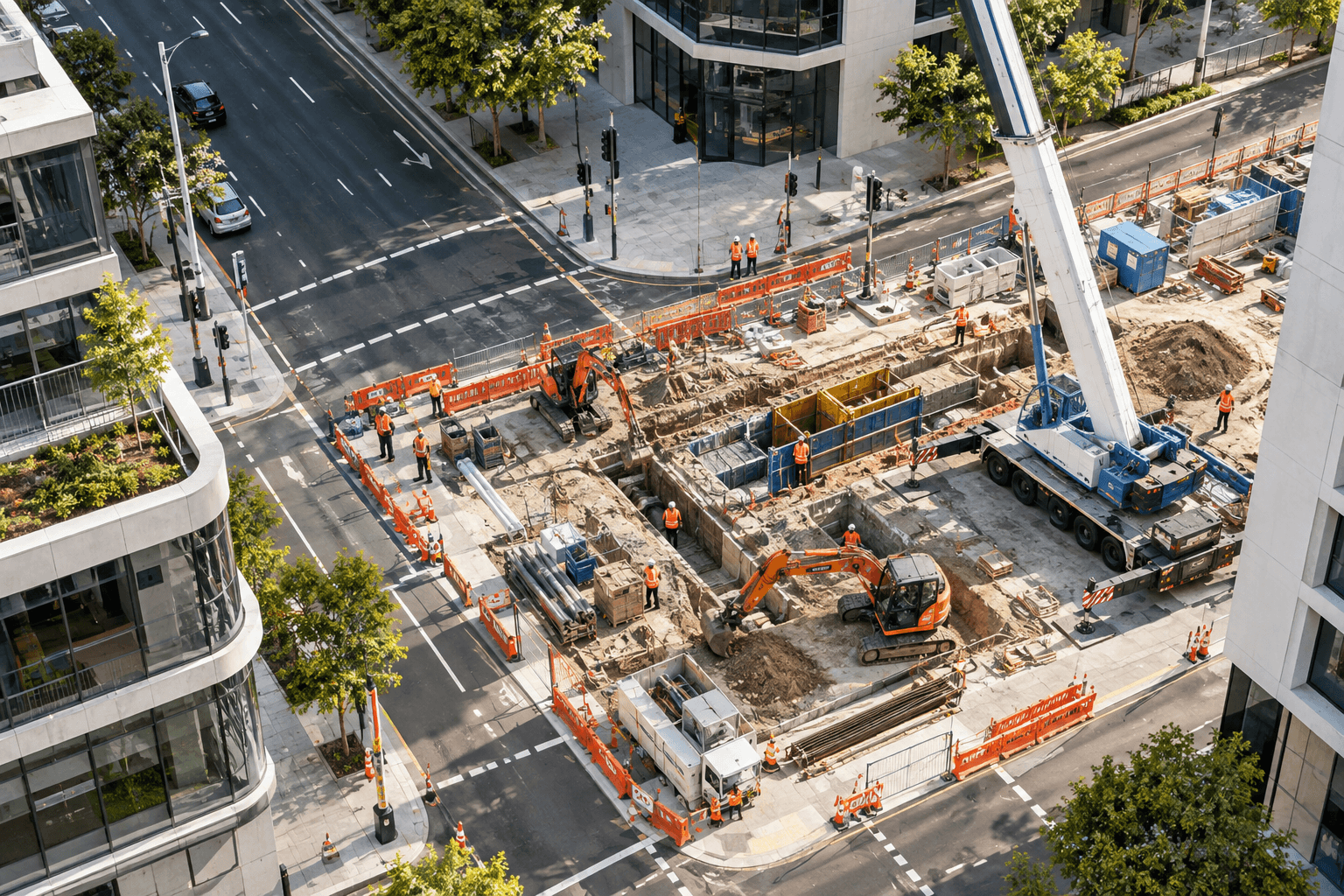
Demolition and remediation
Demolition plant must suit the structure, materials, reach and waste stream. Attachments, dust suppression, screening and transport are part of the selection—not afterthoughts.
Read the whole workface.
Demolition takes structures apart in a controlled sequence; remediation deals with contaminated soil, asbestos or hazardous materials left behind. Surveys of hazardous materials must come first, because they determine the method, licensing and disposal.
Excavators fitted with hammers, pulverisers, shears and sorting grabs do most of the work, supported by skid steers, loaders and tippers. High-reach machines handle taller structures. Dust suppression, water and sometimes screening plant are part of the setup.
Separating waste streams on site—concrete, steel, timber, soil and hazardous material—reduces disposal costs and supports recycling targets.
Machines most often involved: excavator hire, excavator attachment hire, skid steer and bobcat hire, tipper truck hire, air compressor hire.
Three questions that expose the gaps.
- What has been surveyed?
- How will material leave?
- Is high reach required?
Demolition and remediation: questions
- What equipment is used for demolition?
- Excavators with demolition attachments, skid steers, loaders, tippers, compressors and water for dust suppression. Larger structures may need high-reach excavators or cranes.
- Does demolition need a licence?
- Demolition work and asbestos removal are regulated. Licence requirements vary by state and scope—confirm with your state regulator.
- How is demolition waste disposed of?
- Waste is separated, classified and taken to licensed facilities. Contaminated material needs specific handling and tracking.