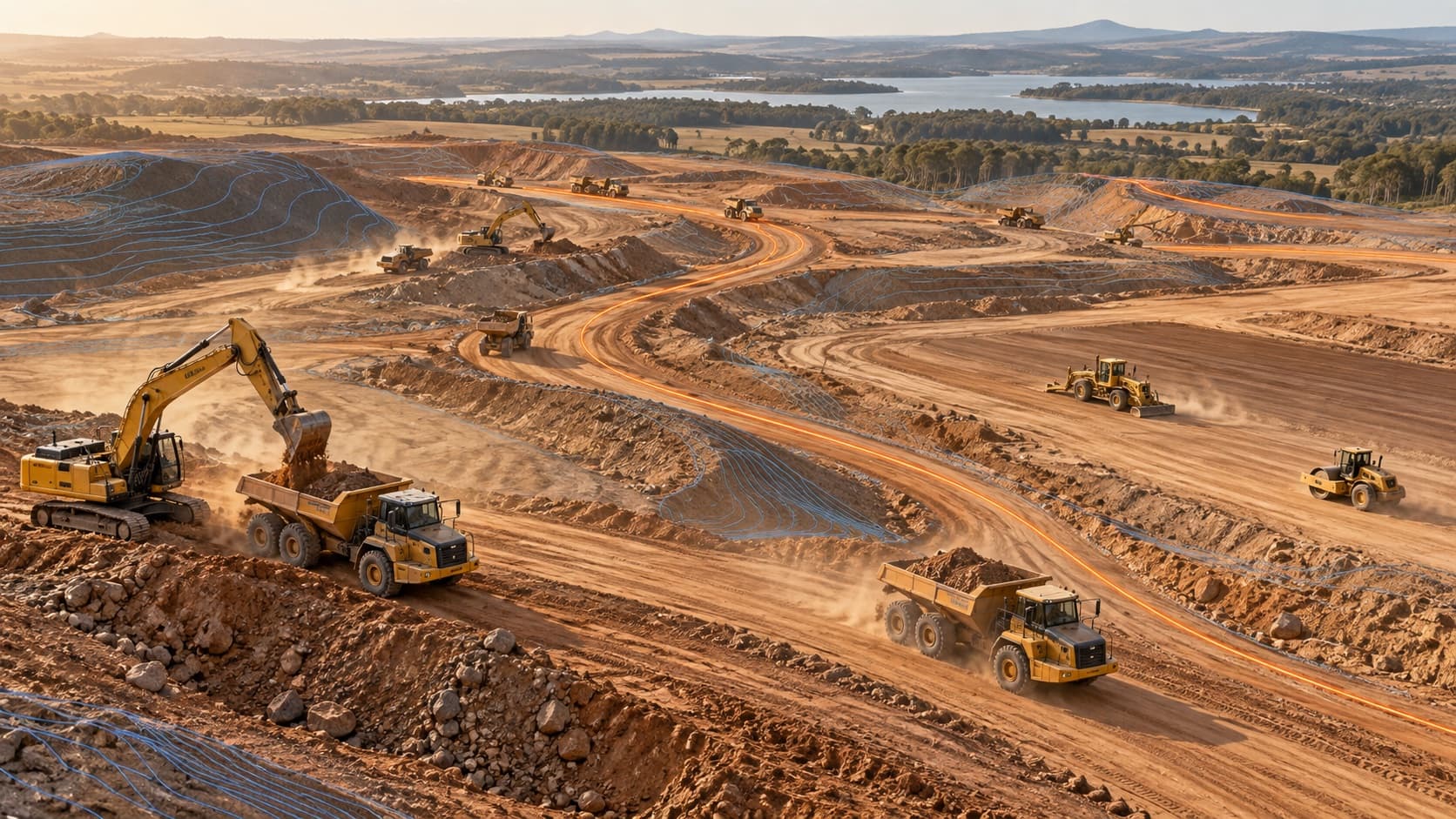
New subdivision plant plan
A subdivision moves from clearing and bulk earthworks through drainage, roads, services and finishing. Fleet requirements change as workfaces multiply.
Read the whole workface.
Residential subdivisions progress from clearing and bulk earthworks through stormwater, sewer and water services to roads, footpaths and landscaping. Plant needs change at every stage.
Early stages use dozers, large excavators, moxies, graders, rollers and water carts. Services stages shift to midi excavators, trench shields, compaction plant and pipe-handling equipment. Road stages bring graders, rollers, tippers and paving crews.
Coordinating multiple contractors and keeping haul routes open are the main planning challenges.
Machines most often involved: excavator hire, dozer hire, grader hire, roller hire, water truck and water cart hire, dump truck hire.
Three questions that expose the gaps.
- Which stage controls handover?
- Can haul routes stay open?
- Where will plant stand down?
New subdivision plant plan: questions
- What plant is needed for a subdivision?
- Earthmoving fleet for bulk works, excavators and compaction for services, and road construction plant for pavements.
- How long do subdivision civil works take?
- From a few months for small stages to over a year for large estates, depending on size and weather.
- What slows subdivision earthworks?
- Wet weather, testing hold points, service authority approvals and contractor interfaces.