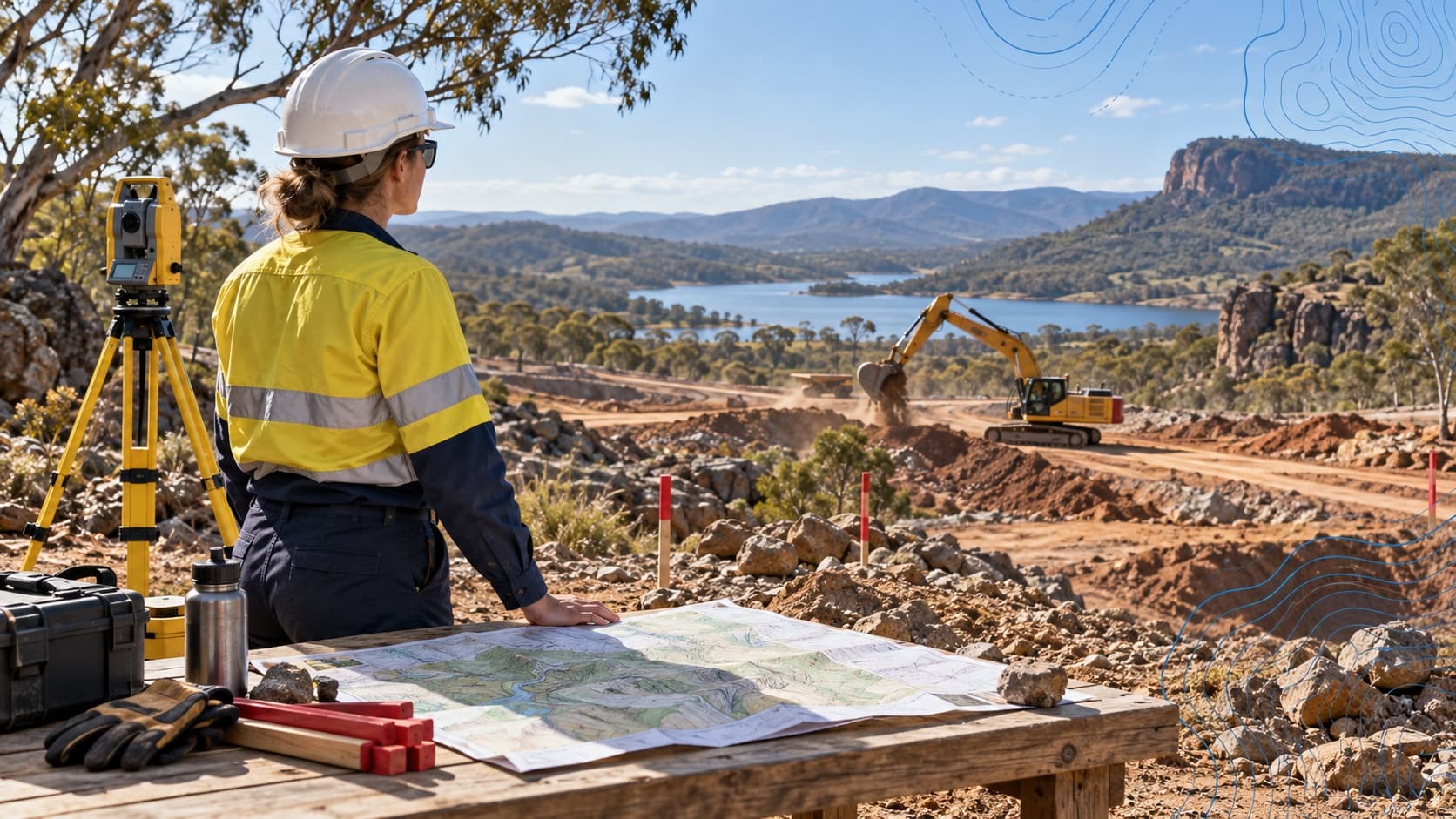
Soft or wet ground
Low bearing capacity changes undercarriage choice, machine weight, access routes and recovery planning. Treat ground improvement and matting as production inputs.
Read the whole workface.
Soft ground reduces traction, bogs machines and can destabilise cranes and elevating work platforms. After rain, a site that was workable yesterday may not support the same equipment today.
Tracked machines with wide pads spread the load better than wheeled equipment. Ground mats, crane pads and temporary haul roads spread it further. For lifting equipment, ground bearing capacity under outriggers or tracks must be understood, not assumed.
Plan for recovery: identify where a bogged machine would be pulled out from and with what, before it happens.
Machines most often involved: excavator hire, skid steer and bobcat hire, dump truck hire, dozer hire, pump hire.
Three questions that expose the gaps.
- Has the access route been tested?
- Where can a float unload?
- What happens after rain?
Soft or wet ground: questions
- What machines work best in soft ground?
- Tracked excavators, compact track loaders and dozers with wide pads. Articulated dump trucks handle soft haul roads better than rigid trucks.
- What are crane mats?
- Timber, steel or composite mats placed under outriggers or tracks to spread load over a larger area.
- Will suppliers charge for bogged machines?
- Recovery costs and damage are often charged to the hirer. Clarify responsibilities before work starts.