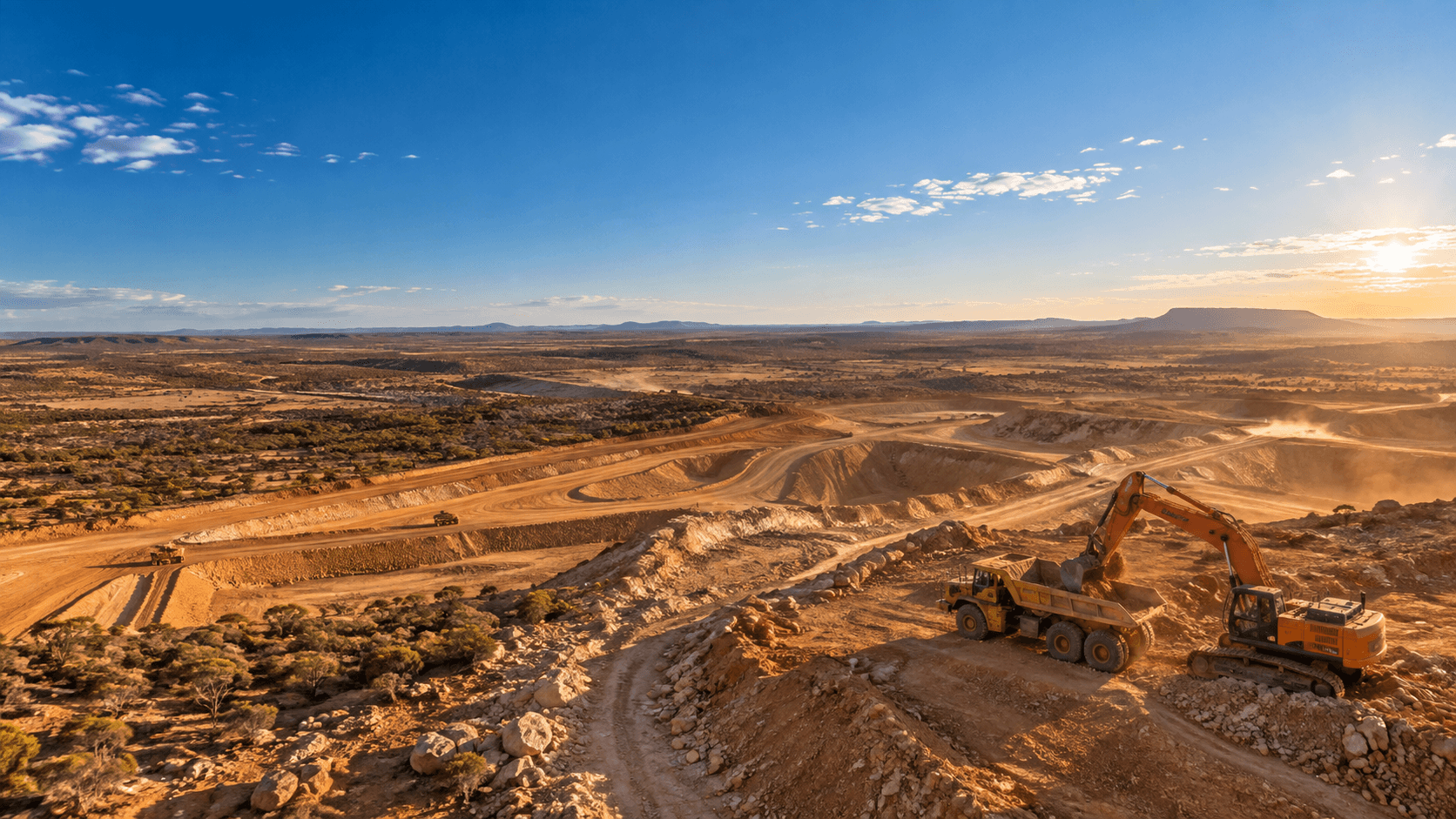
Bulk earthworks
Bulk earthworks are a production system: excavators, dozers, loaders, haul units, graders, water and compaction all need to cycle at compatible rates. Start with material type, cut-to-fill balance and haul distance before choosing machine sizes.
Read the whole workface.
Bulk earthworks move large volumes of soil or rock from cut to fill, stockpile or disposal. Production is set by the slowest link in the loop: an excavator that loads faster than the trucks can return simply waits, and a roller that cannot keep pace with spreading leaves uncompacted layers exposed to weather.
Start with a quantity estimate, the material description from the geotechnical report and a haul sketch. From there, a supplier can propose the primary loading machine—typically a 20–45 t excavator or a wheel loader—then balance dump trucks or moxies, a dozer for spreading, a grader for trimming, water carts and compaction plant.
Weather allowances, haul-road maintenance and testing hold points belong in the plan from day one. Ask suppliers how they handle wet-weather standby, how production will be measured and who maintains haul roads.
Machines most often involved: excavator hire, dump truck hire, dozer hire, grader hire, roller hire, water truck and water cart hire.
Three questions that expose the gaps.
- What volume must move per shift?
- Where does material finish?
- Which machine controls the cycle?
Bulk earthworks: questions
- What machines are used for bulk earthworks?
- A typical fleet is a large excavator or loader, articulated dump trucks, a dozer, a grader, one or more water carts and a padfoot or smooth-drum roller. The mix depends on material, haul distance and compaction requirements.
- How do I estimate how many trucks I need?
- Divide the full truck cycle time (load, haul, tip, return) by the time it takes to load one truck. Round up and review after the first shift using actual cycle times.
- Should earthworks plant be wet or dry hire?
- Most bulk earthworks plant is wet hired because production depends on experienced operators. Dry hire suits contractors with their own operators and supervision.