Farm, water and property works
Farm dams, tracks, clearing, drainage and property improvement often depend on travel distance, changing ground and owner-operated logistics. Define the outcome and access before comparing hourly rates.
Read the whole workface.
Regional property work covers dams, tracks, fencing lines, clearing, drainage, contour banks and shed pads. The work is often seasonal, remote and done with the owner closely involved.
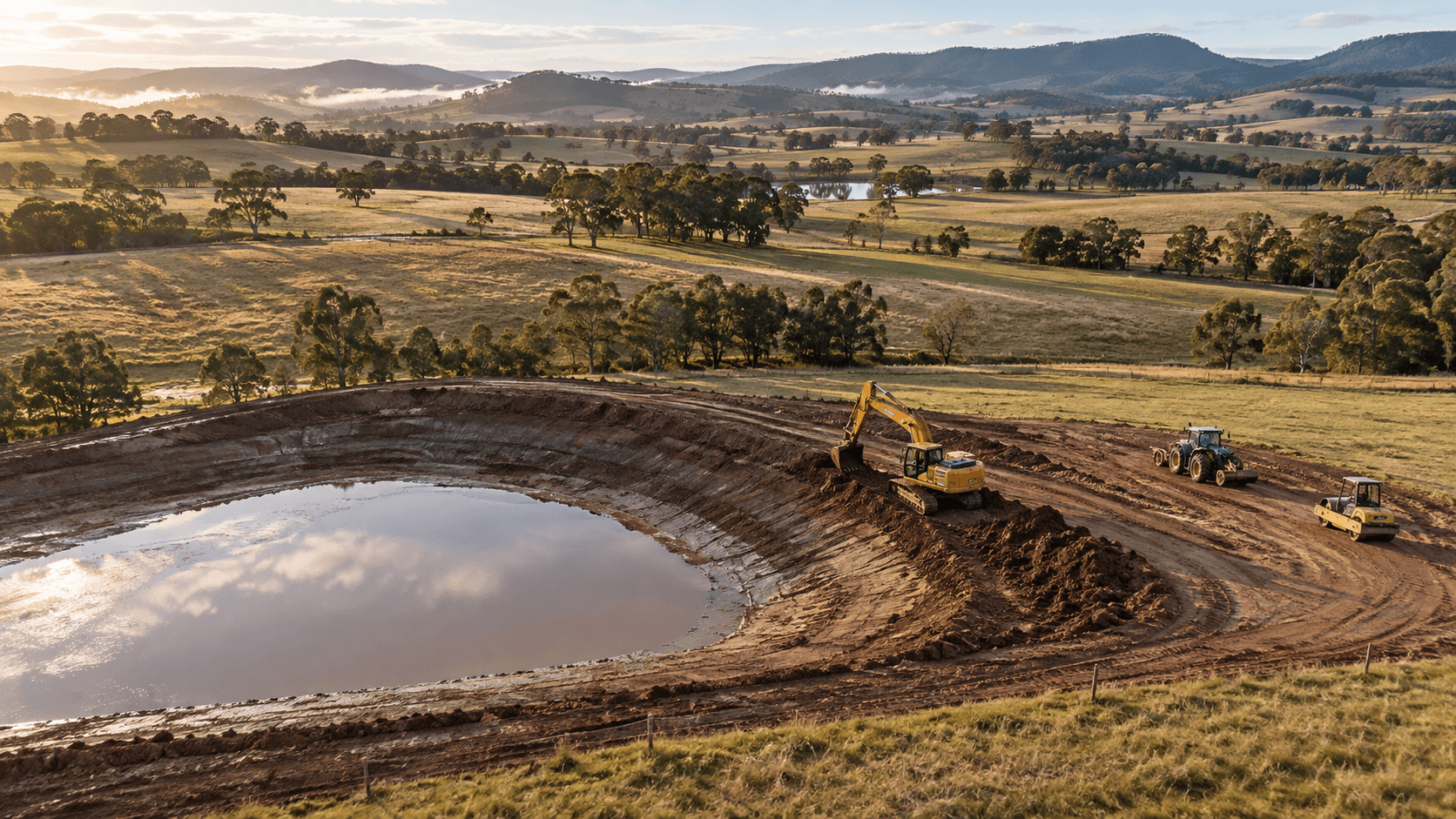
Dozers and excavators build dams and tracks; graders maintain long internal roads; skid steers and telehandlers handle materials; rollers and water carts compact dam walls and pads. Travel distance and float access often make local operators the most practical choice.
Soil suitability matters most for dams. Test that suitable clay is available before committing to excavation.
Machines most often involved: dozer hire, excavator hire, grader hire, skid steer and bobcat hire, telehandler hire, roller hire.
Three questions that expose the gaps.
- Can a float reach the work?
- Is material balanced on site?
- Who supplies consumables?
Farm, water and property works: questions
- Who builds farm dams?
- Local earthmoving contractors with dozers and excavators, ideally with experience in dam construction and compaction.
- What equipment is needed for farm tracks?
- A grader or dozer to form the track, a roller to compact it, and a water cart where material and weather require moisture control.
- Do farm dams need approval?
- Many do. Water entitlements and dam size rules vary between states and catchments—check before building.