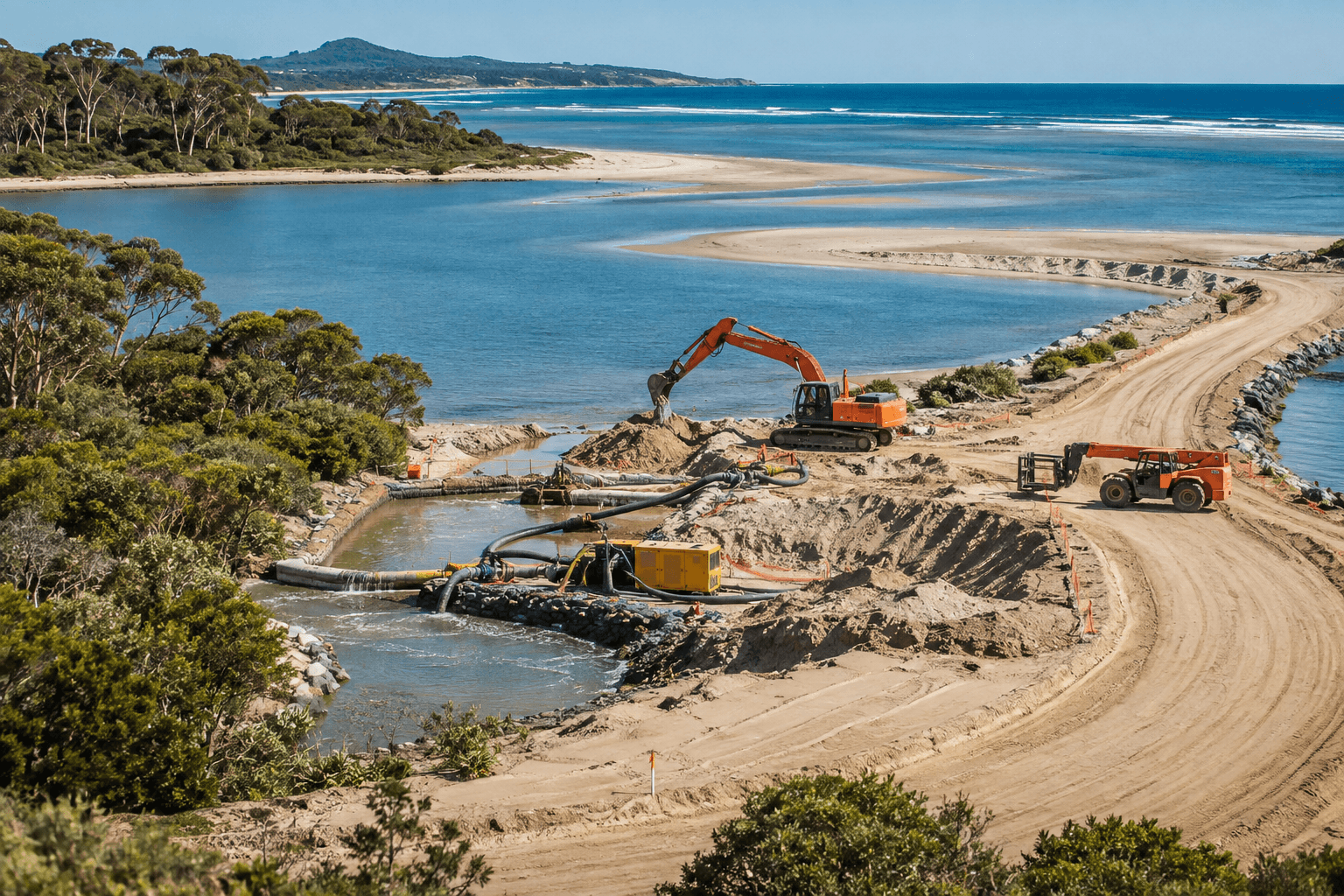
Drainage and dewatering
Water changes production, stability and environmental risk. Define inflow, head, solids and discharge conditions so pumping equipment and backup capacity match the consequence of failure.
Read the whole workface.
Drainage builds permanent systems—pipes, pits, culverts and channels—while dewatering temporarily removes water so excavation and construction can proceed. Both depend on understanding where water comes from and where it can legally go.
Dewatering equipment ranges from submersible pumps in sumps to wellpoint systems that lower the water table around a trench. Drainage construction needs excavators, pipe-handling equipment, compaction and sometimes cranes for large culverts.
Discharge quality is increasingly regulated. Plan for sediment control, settlement tanks or treatment before water leaves site.
Machines most often involved: pump hire, dewatering equipment hire, excavator hire, generator hire, franna crane hire.
Three questions that expose the gaps.
- Is duty continuous?
- What is the standby plan?
- Where can hoses cross safely?
Drainage and dewatering: questions
- What is the difference between drainage and dewatering?
- Drainage is permanent infrastructure that manages water. Dewatering is a temporary process of removing water to allow construction.
- What pump do I need for dewatering?
- It depends on flow, head, solids and duration. Submersible pumps suit sumps; diesel self-priming pumps suit surface water; wellpoints suit groundwater in sandy soils.
- Do I need a permit to discharge water?
- Often. Councils and environmental regulators may set conditions on volume and quality.