Concrete and foundations
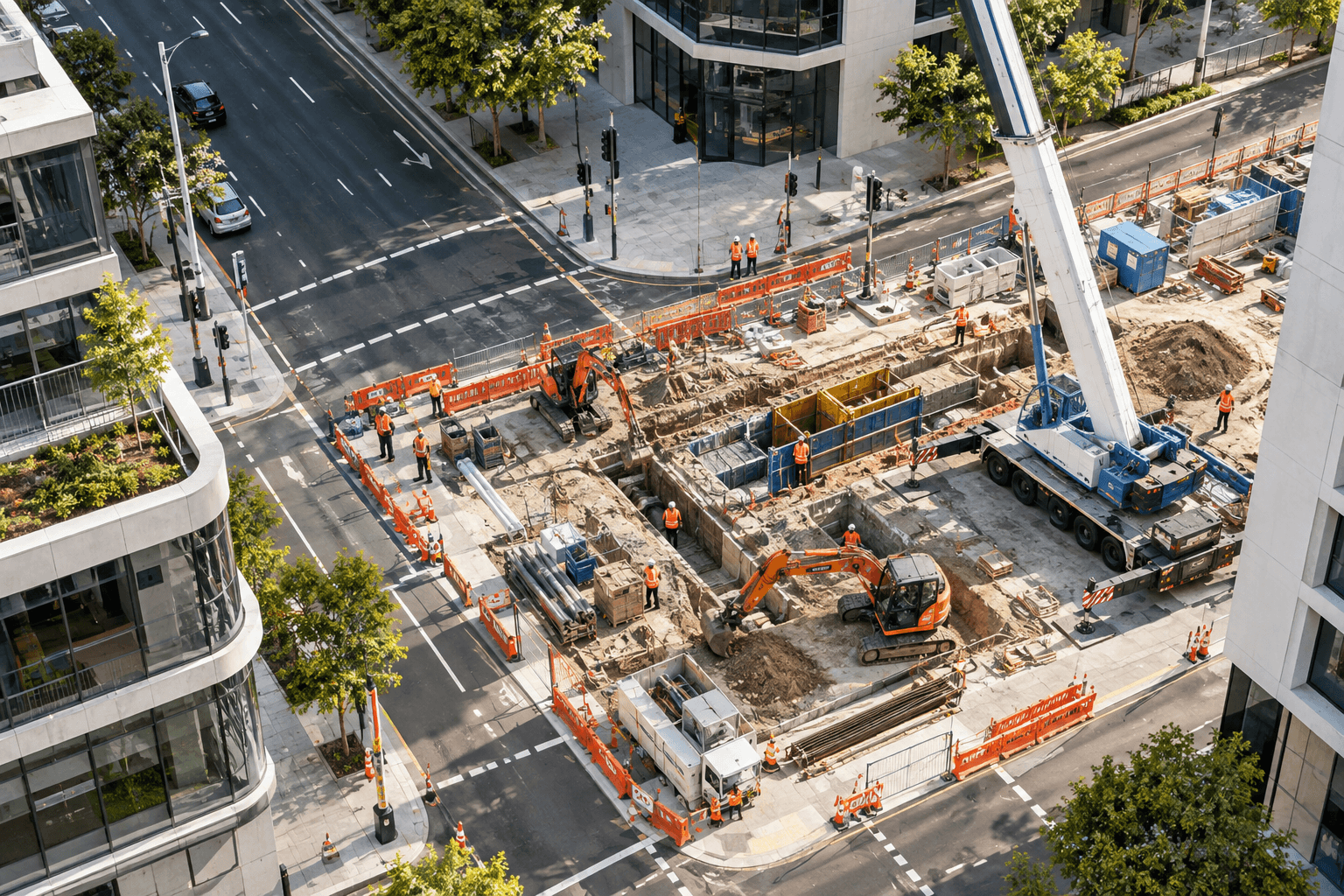
Foundation work connects excavation, drilling, lifting, pumping, access and spoil handling. Programme the handoffs so plant does not compete for the same narrow work zone.
Read the whole workface.
Foundations connect excavation, piling or drilling, reinforcement, formwork and concrete placement. On a busy site, these activities compete for the same space, access and crane time.
Excavators and augers form footings and piers; compaction equipment prepares subgrade; telehandlers and cranes place reinforcement and formwork; and concrete pumps and agitator trucks need clear access and queuing space. Pumps may be needed where groundwater enters excavations.
The geotechnical report and structural drawings define the founding layer. Share both with suppliers so equipment is suited to the ground and depth.
Machines most often involved: excavator hire, excavator attachment hire, plate compactor hire, telehandler hire, mobile crane hire, pump hire.
Three questions that expose the gaps.
- What founding layer is expected?
- Where can trucks queue?
- Which activity owns the crane?
Concrete and foundations: questions
- What equipment do I need for footings?
- An excavator or auger, compaction equipment, and handling equipment for steel and formwork. Concrete placement may need a pump or crane and kibble.
- Can an excavator drill piers?
- Yes, with an auger attachment matched to the machine. Larger or deeper piles need a dedicated piling rig.
- How do I keep footings dry?
- Use sump pumps or dewatering, protect excavations from rain, and pour promptly after inspection.